

Training Programs


A national initiative developing bilingual learning modules to support equitable access to oral health care across Canada.
Project Overview
Led by the Association of Canadian Faculties of Dentistry (ACFD) and the University of Manitoba, Advancing Access to Oral Health Care for All is an Oral Health Access Fund (OHAF) national initiative developing a series of evidence-based learning modules on access to care for underserved communities. Module leads from dental schools across Canada are collaborating on content development, with the modules intended for oral health care learners and professionals nationwide. The project aims to support more equitable, culturally safe, and accessible oral health care for underserved communities across Canada
What We’re Building
A suite of bilingual learning modules aimed at:
- Establishing a nationally coordinated learning series focused on access to oral healthcare for underserved communities
- Enhancing the knowledge and reflective practice of oral health care providers in addressing access barriers faced by underserved communities
- Contributing to systemic improvements in access to care by aligning education with national priorities in oral healthcare delivery.
Topics include care for Indigenous populations, people living in poverty, people with disabilities, elderly and long-term care residents, newcomers and refugees, children, people experiencing abuse or domestic violence, rural and remote communities, LGBTQ+ populations, and inter-professional approaches to care.
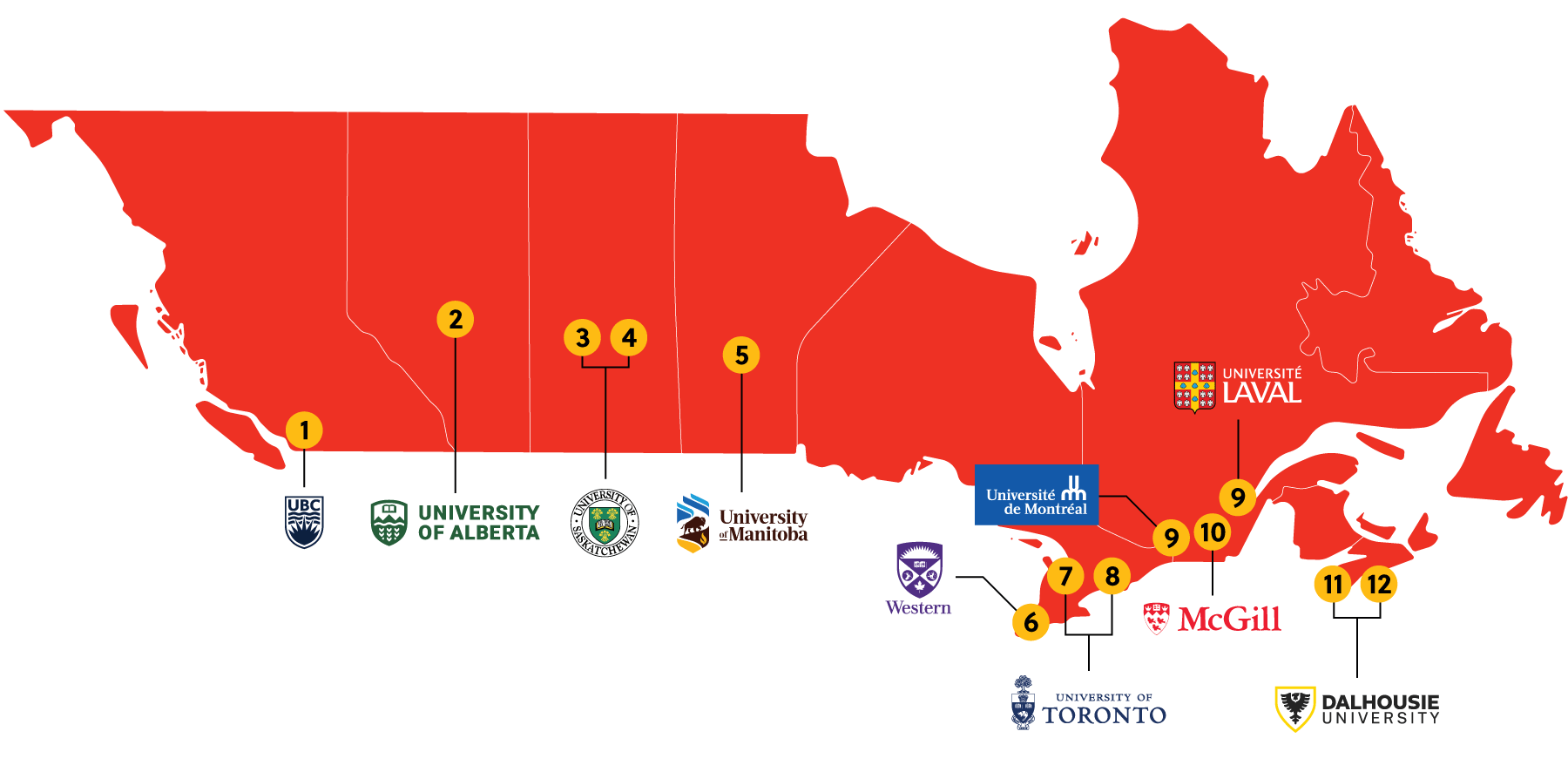
- 1 LGBTQ+
- 2 Rural & Remote
- 3 Mental Health & Substance Use
- 4 Interprofessional Care
- 5 Indigenous
- 6 Children
- 7 Social Assistance & Poverty
- 8 Domestic Violence & Abuse
- 9Cross-Module Collaborators (French)
- 10 Geriatrics & Long-Term Care
- 11 People with Disabilities
- 12 Newcomers & Refugees
Project Timeline
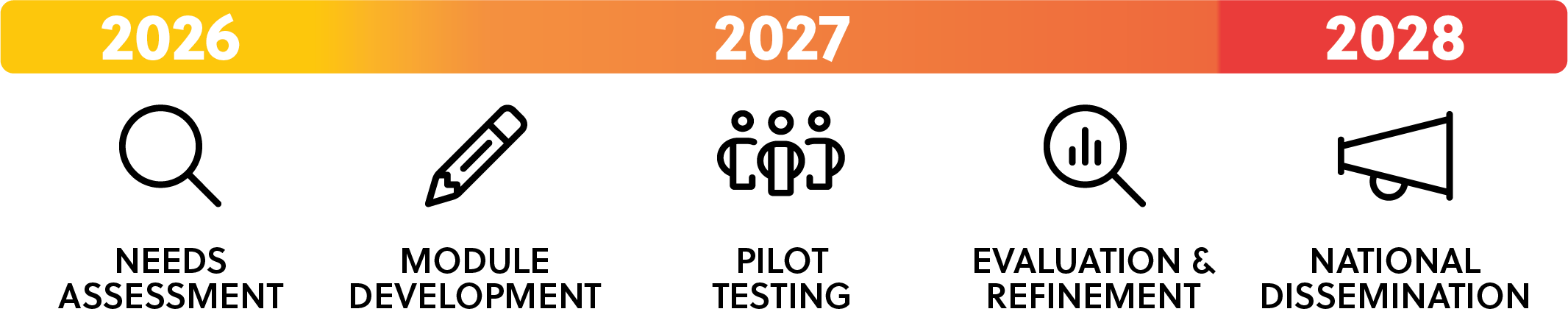
2026–Early 2027: Needs assessment, content mapping and module development
2027: Module development continues, pilot testing, evaluation and refinement
Early 2028: Full launch and modules dissemination
What Makes This Initiative Unique?
- National scope
- Multiple learning modules
- Community-informed approach
- Collaboration across universities, colleges, professionals, and community partners
- Asynchronous and flexible learning
- Designed for broad uptake and dissemination
Who are the Target Audiences?
The learning modules are being developed for oral health care learners, educators and professionals across Canada, including dentists, dental hygienists, dental therapists, dental assistants, and denturists. The project also aims to engage academic institutions, professional associations, community organizations and partners working to advance equitable access to oral health care.
Community Voice and Collaboration
The initiative is being shaped by stakeholder engagement, community perspectives, and collaboration across academic, professional, and community partners to ensure the modules are relevant, responsive, and grounded in real-world needs.
Are you an Oral Health Professional?
We would love to hear your thoughts on the potential gaps in training and education related to access to care for underserved communities. Follow the link below to answer a short survey.
Are you a community representative or a member of an underserved group?
We would love to hear from you on how to better support oral health professionals in the delivery of care for all members of society. Follow the link below to answer a short survey.
Project Team
| Academic Leads | Raj Bhullar and Nora Makansi |
| Project Manager | Brinda Khanna |
| Educational Analyst | Tina Saleh |
| Instructional Designer | Taiwo Badejo |
| Financial Advisor | Chukwudi Ofili |
| Module Development Leads | Mario Brondani (LGBTQ+) University of British Columbia |
| Trudy Aucoin and Blaine Aucoin (Rural & Remote) University of Alberta |
|
| Amrinderbir Singh (Interprofessional Care) Michelle Siqueira (Substance Use & Mental Health) University of Saskatchewan |
|
| Joan Pelletier (Indigenous) University of Manitoba |
|
| Keith Da Silva (Children) Western University |
|
| Sonica Singhal (Domestic Violence & Abuse) Sonica Singhal and Joel Rosenbloom (Social Assistance & Poverty) University of Toronto |
|
| Bishoy Yacoub and Melvin Schwartz (Geriatrics & Long-Term Care) McGill University |
|
| Lindsay James (People with Disabilities) Heather Doucette (Newcomers & Refugees) Dalhousie University |
Get Involved and Learn More
Interested in learning more about the project? Contact our project manager Dr. Brinda Khanna.
If you would like to get involved, please complete and submit the following form, and a member of our team will be in touch soon.
Financial contribution from


c/o Dr. Gerald Niznick College of Dentistry
D113–780 Bannatyne Avenue
Winnipeg, Manitoba, Canada R3E 0W2
Copyright © ACFD. All rights reserved. Privacy Policy.